
Let’s clear up the confusion about what you can wear and what you can bring inside. Here’s everything you need to know about Castel Sant’Angelo’s dress code and baggage rules to avoid any surprises at the entrance

Support when you need it
Customer service to help you with all your needs from 8:00 a.m. to 7:00 p.m.
Fast and online booking
Choose the best option for your needs and preferences and avoid the lines.
Top attraction in Rome
Explore a true symbol of power, history, and art in the heart of Rome.
Look, Castel Sant’Angelo doesn’t care if you show up in shorts and a tank top. As a secular national museum since 1925, there’s no official dress code enforced at the entrance. The guards won’t stop you for your outfit choice.
But here’s the thing, while there’s no written rule, there’s an unspoken cultural expectation to dress with a bit of respect. This isn’t a stuffy requirement, just a nod to the monument’s layered history. We’re talking about a place that was once an imperial tomb, a papal fortress, and a political prison. Some visitors feel more comfortable choosing modest, respectful clothing rather than full-on beachwear, simply out of recognition for the souls who were buried, imprisoned, or sought refuge within these walls.
That said, the real dress code here? Comfort and practicality.
Your shoes are non-negotiable. This is the most critical piece of advice you’ll get. Castel Sant’Angelo has steep staircases, uneven surfaces, and potentially slippery ancient stone floors. You’ll be climbing through five levels, navigating narrow passages, and ascending a long helical ramp originally designed for funeral processions. Flip-flops or high heels? Forget about it.
Here’s where things get tricky for tourists. Because Castel Sant’Angelo sits so close to Vatican City, many visitors assume they share the same rules. They don’t. At all.

The Vatican is a sovereign religious state, and that changes everything. Here, a strict dress code is mandatory and vigorously enforced by Vatican guards. This applies to the Vatican Museums, Sistine Chapel, and Vatican Gardens:
Guards will deny you entry if you don’t comply. No exceptions, no excuses.

St. Peter’s Basilica follows the same strict Vatican dress code.
Both men and women must cover knees and shoulders. Men can wear trousers and shirts (shorts are allowed if they reach the knee). Women can wear long skirts or dresses, but sleeveless tops, crop tops, and anything revealing is forbidden.
One interesting detail: women can wear hats during Mass, but men must remove theirs before entering.
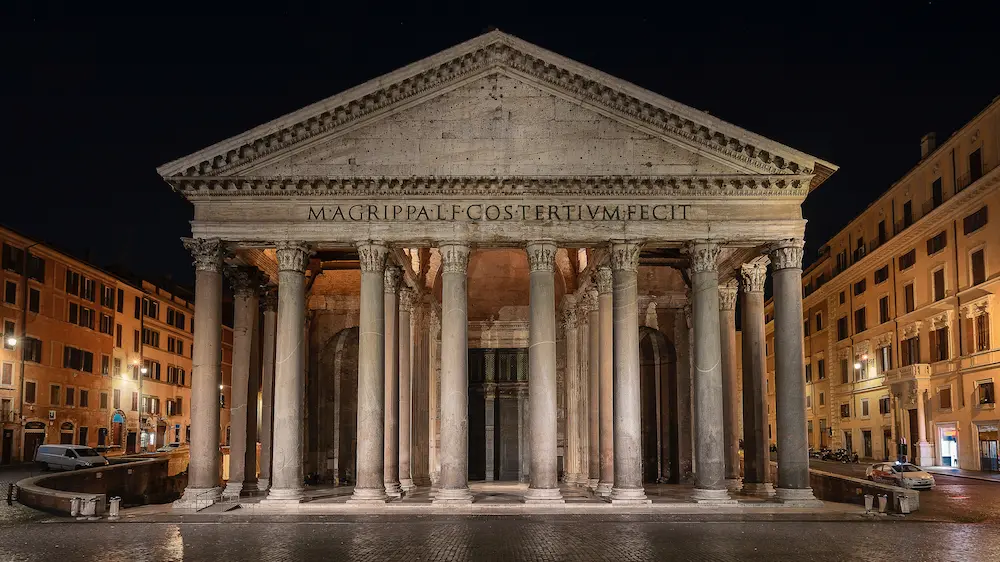
The Pantheon might surprise you. Yes, it was originally a Roman temple, but it’s been a functioning Catholic church since it was consecrated centuries ago. That means a dress code applies here too.
The rules are generally less strictly enforced than at the Vatican, but teenagers should follow the same guidelines as adults. Young children typically get a pass.
Your survival strategy? If you’re planning to visit multiple sites in one day, dress for the strictest code (the Vatican) in the morning. Pack a light scarf or shawl in your bag. At Castel Sant’Angelo, you can wear your shorts and tank top comfortably, then simply drape the scarf over your shoulders before entering Vatican territory. Problem solved without a complete wardrobe change.
Alright, this is where things get serious. If you ignore this section, you could end up at the entrance with a pre-paid, time-stamped ticket and a suitcase you can’t bring inside. Let me save you from that nightmare.
Castel Sant’Angelo has no coat check, no luggage storage, no lockers. Zero. Nothing.
Yes, you’ll find some outdated travel guides online claiming there’s a cloakroom service. They’re wrong. The official sources are unambiguous about this. CoopCulture, the museum’s official ticketing partner, explicitly states: “The cloakroom is not available”. The Italian government’s museum page confirms: “Non è previsto il servizio di guardaroba” (No cloakroom service is provided).
What you can bring:
What’s absolutely forbidden:
The lack of on-site storage has created a thriving ecosystem of private luggage storage services nearby: Stow Your Bags (Corso Vittorio Emanuele II, 310), 3 minutes walk; Bounce (Via Paola, 21 or Borgo Vittorio, 111), 5-7 minutes walk; Radical Storage (Multiple locations nearby), 4-5 minutes walk; LugLockers (Near Lepanto metro station), 10-12 minutes walk.
