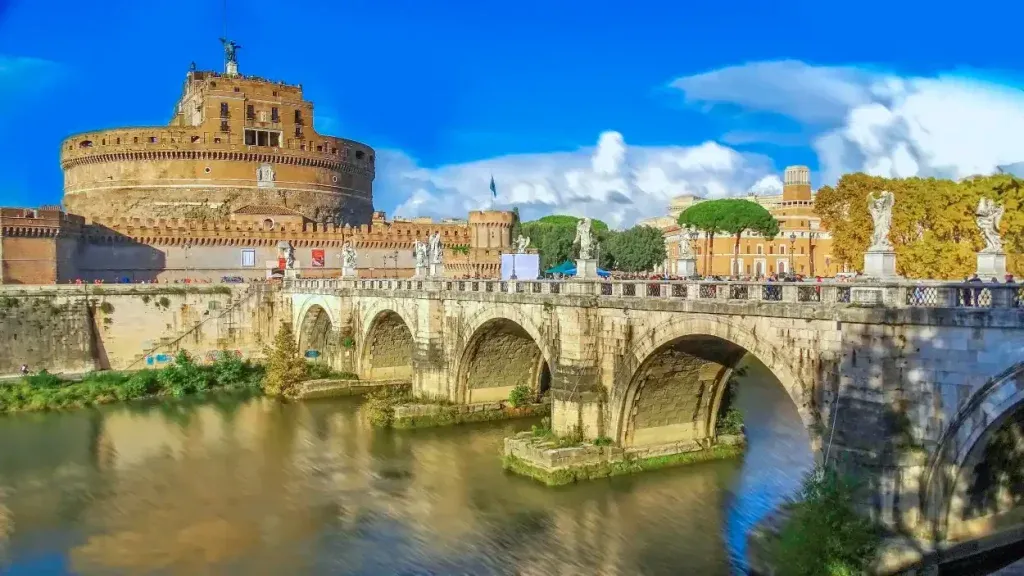
Sant'Angelo Bridge in Rome
Discover the Ponte SantʼAngelo. Here, we will analyze what is, where is located, its architectural design, the sculptures that adorn it, and the historical context you should know before your visit.
Support when you need it
Customer support to help you with everything you need from 8:00 to 18:00.
Fast and online booking
Select your ticket for your needs and preferences and avoid the lines booking here.
Top Attraction in Rome
Ascent through the fortress levels to observe the architectural history and the evolution of the city.
What is Ponte Sant'Angelo and where is it located?
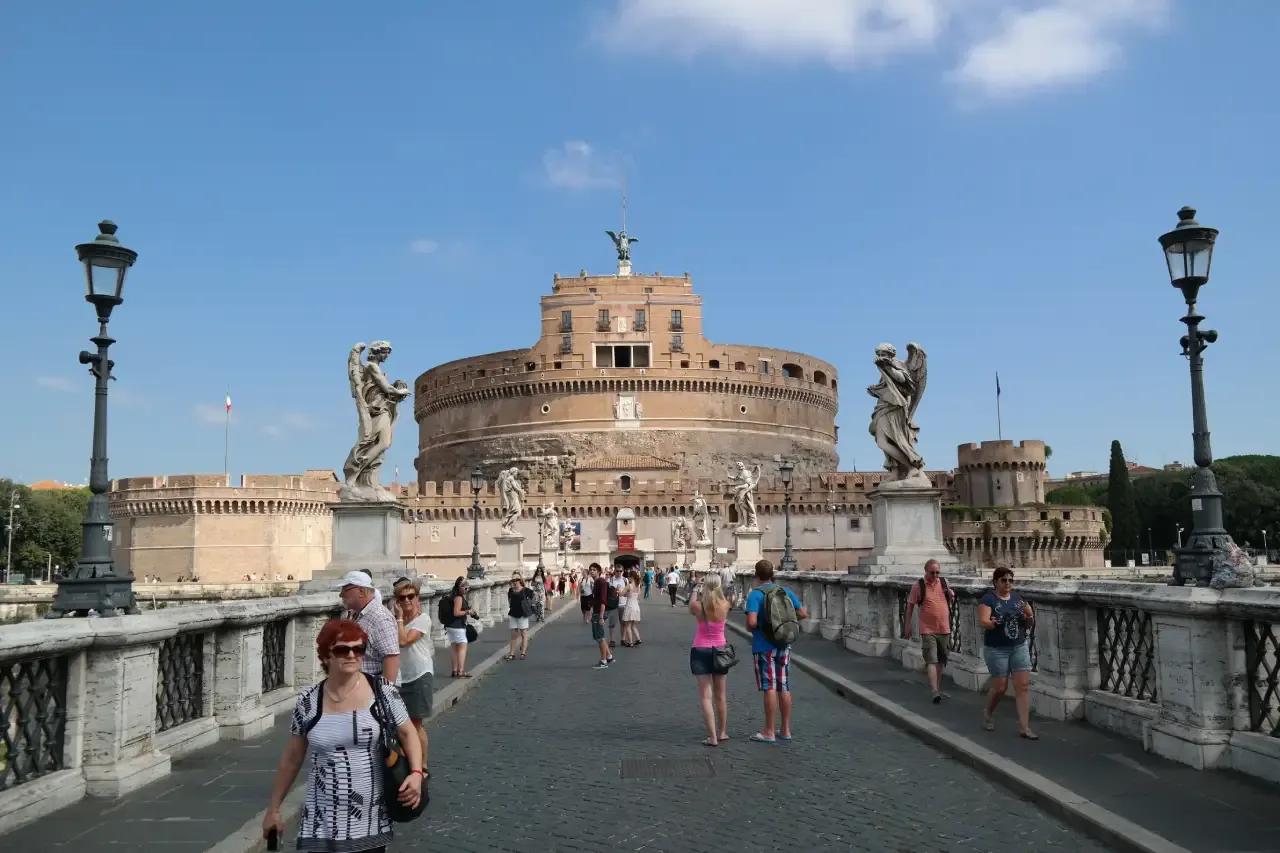
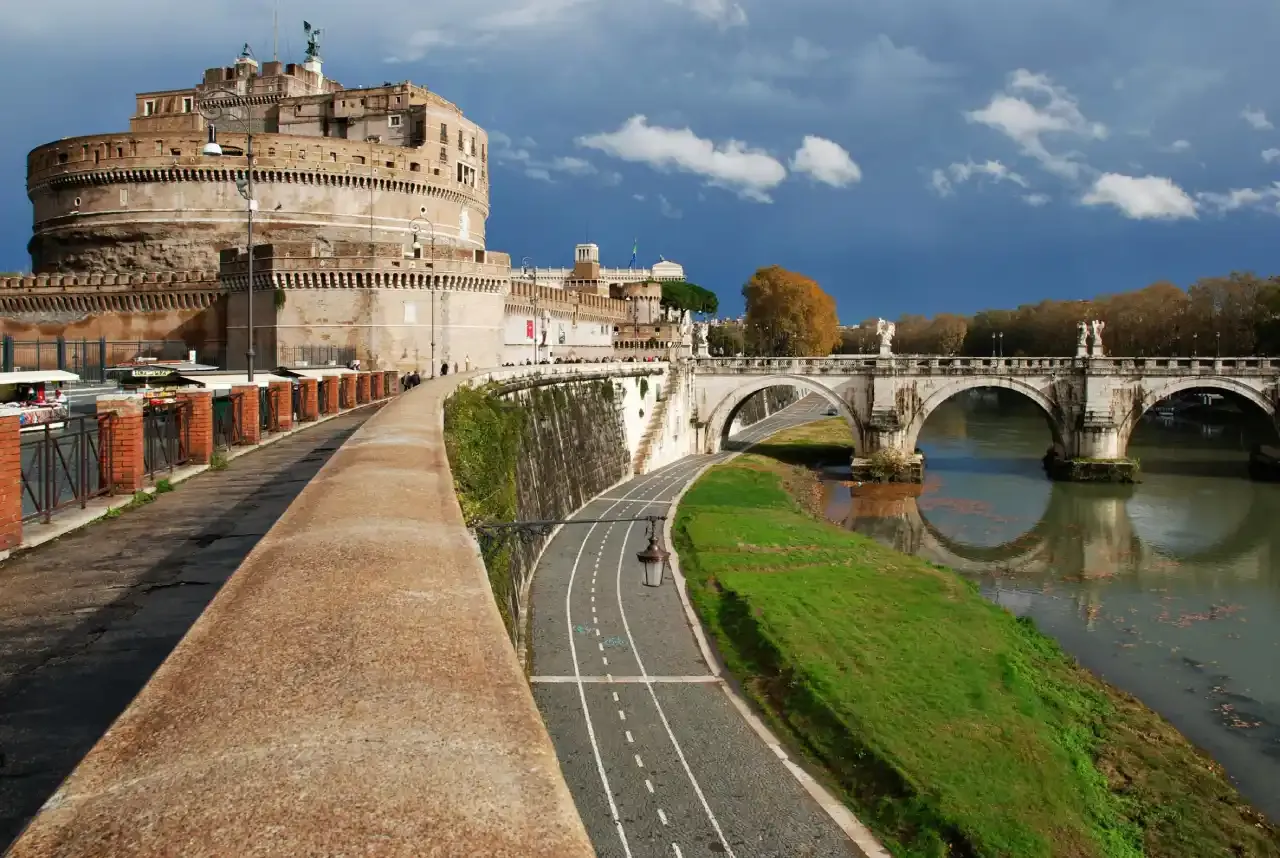
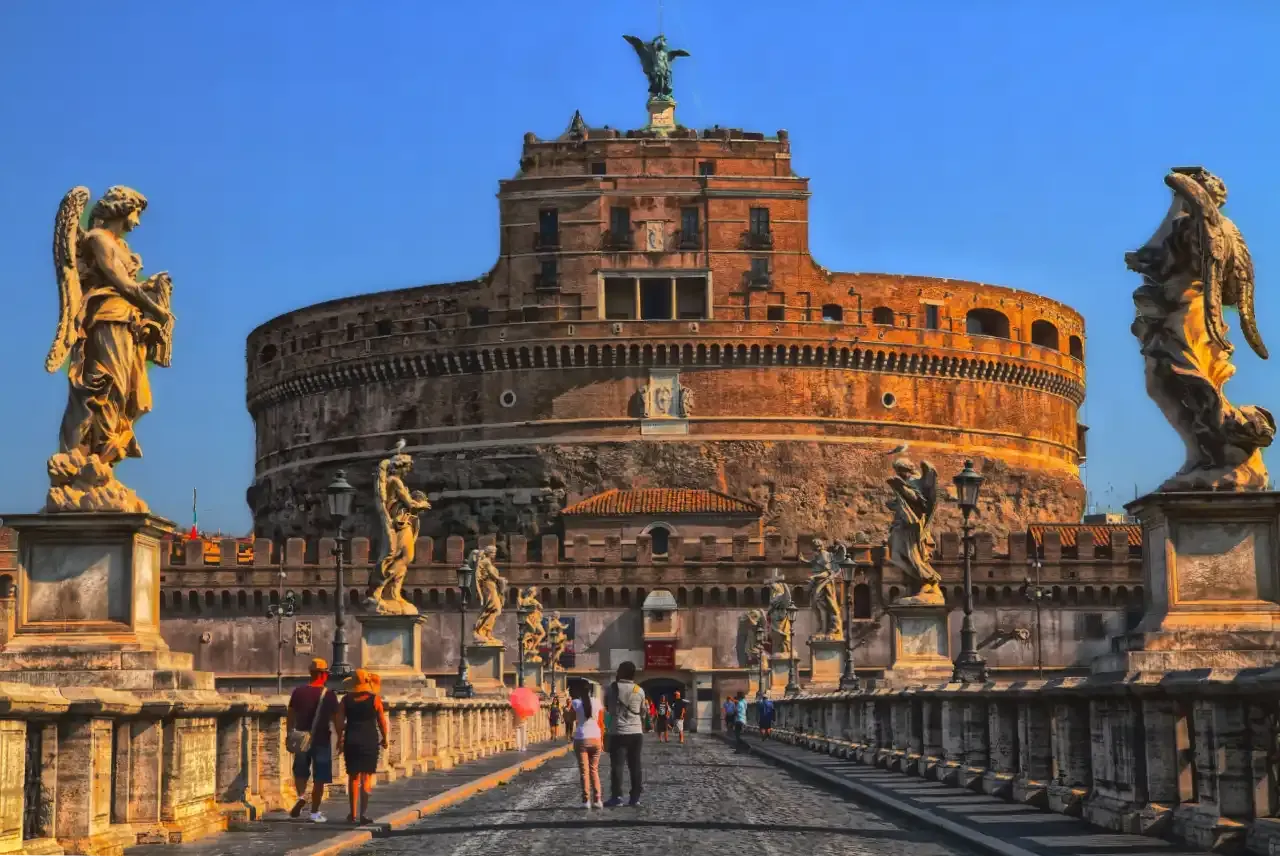
The Ponte SantʼAngelo is a pedestrian walkway spanning the water, lined with different sculptures on the way to the eponymous castle. Historically known as Pons Aelius, its original Latin name, it is also commonly referred to in English as the Aelian Bridge.
For centuries, its primary function has been to provide direct access to the Mausoleum of Hadrian, a Roman emperor who ruled between 117 and 138 AD. Hadrian was known for being cultured, well-traveled, and interested in architecture, philosophy, and art. His mausoleum is a circular structure known today as Castel SantʼAngelo.
To give you an idea of its scale: the bridge is about 135 meters long and approximately 7 meters wide. It consists of five stone arches, the central three of which are original from the Roman era. Its location is strategic, situated right in the historic center, connecting the Rione Ponte with the Borgo district and the Vatican. Upon crossing, you will notice it is an exclusively pedestrian space, allowing you to walk peacefully while enjoying the river breeze and views of St. Peterʼs Dome.
In terms of significance, beyond its architectural value, this bridge has been the path traveled by millions of pilgrims over the centuries to reach St. Peterʼs tomb. It is not merely a work of engineering, but a symbol of the transition between Imperial Rome and Christian Rome.
Additionally, it is located at a point where the Tiber River makes a sharp curve, making it the perfect viewpoint to watch the sunset. It is, essentially, the gateway to one of the most impressive monumental complexes in the world.
Statues of Ponte Sant'Angelo
The “Bridge of Angels,” as it is popularly known, is practically an open-air museum narrating a story through the iconography of the Passion of Christ. The mastermind behind this project was Gian Lorenzo Bernini, the Italian sculptor and architect. However, while he designed the concept and supervised the work, the final result was a collective effort by several sculptors from his workshop. Bernini wanted the faithful, upon crossing the bridge, to witness Jesusʼ suffering before reaching the sacred area of the Vatican.
At the start of the bridge, on the side connecting to the city center, you will see two figures acting as guardians. They belong to an earlier era, specifically the 16th century: the statues of St. Peter and St. Paul. Further along, you will see the statuary of the angels, arranged to narrate the chronological sequence of the suffering. These are all the statues you can see on the Ponte SantʼAngelo:
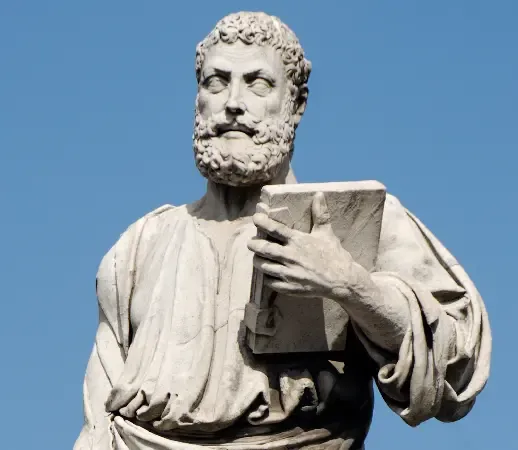
St. Peter
St. Peter statue was sculpted by Lorenzetto in 1534. It represents the apostle carrying the keys to heaven. On its base, you can read the inscription “Hinc humilibus venia,” which means “From here, forgiveness for the humble.” It is the starting point that sets the spiritual tone of the journey.
Photo: “St. Peter Lorenzetto Ponte Sant Angelo Rome” by Jastrow.
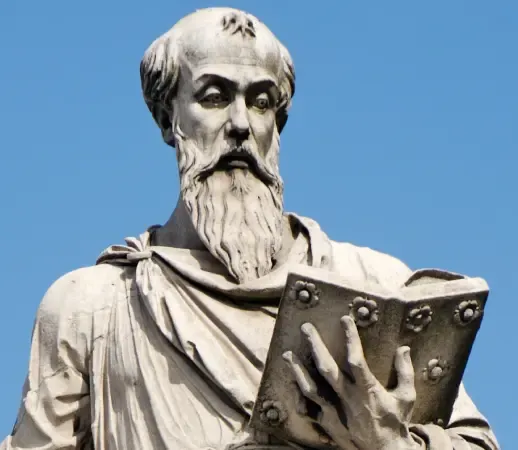
St. Paul
St. Paul is a work by Paolo Romano, this statue shows the saint with a sword in hand, symbolizing his martyrdom and the Word of God. Its inscription, “Hinc retributio superbis,” translates to “From here, retribution for the proud,” serving as a warning to those who cross with ill intentions.
Photo: “St. Paul Paolo Romano Ponte Sant Angelo Rome” by Jastrow.
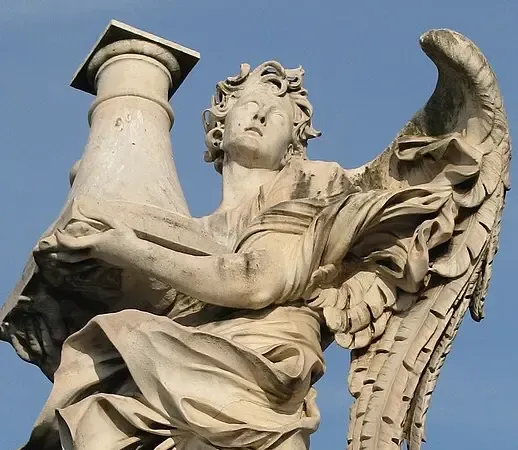
Angel with the Column
Angel with the Column was sculpted by Antonio Raggi, this angel holds the column where Christ was bound to be flogged. It is the first stop on the path of pain, reminding us of the beginning of the physical sacrifice.
Photo: “Antonio Raggi, Angel bearing a column, Ponte Sant Angelo” by Yair-haklai.
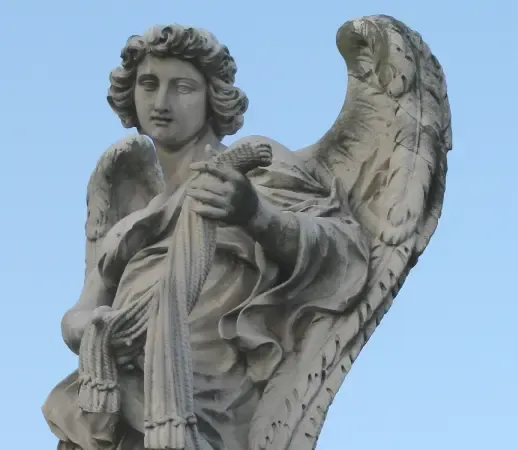
Angel with the Whips
Angel with the Whips sculpture by Lazzaro Morelli. In this case, the angel holds the scourge, the instrument used for the flogging, conveying a sense of rawness typical of the dramatic style of the era.
Photo: “Lazzaro Morelli, Angel bearing whips, Ponte Sant Angelo” by Yair-haklai.
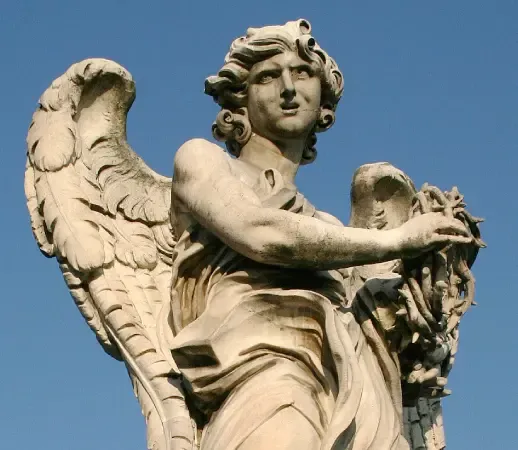
Angel with the Crown of Thorns
Angel with the Crown of Thorns represents the moment Jesus was mocked. Interestingly, the original statue sculpted by Bernini himself was so impressive that the Pope decided to keep it to protect it. The one you see on the bridge today is a copy by Paolo Naldini.
Photo: “Angel with the Crown of Thorns by P. Naldini - Sant'Angelo Bridge - Rome” by Jean-Pol GRANDMONT.
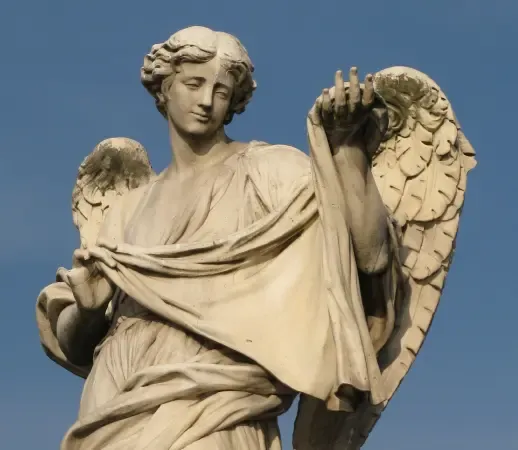
Angel with the Sudarium
Also known as Veronicaʼs Veil, it was sculpted by Cosimo Fancelli. The angel displays the cloth used, according to tradition, to wipe Jesusʼ face, miraculously imprinting his image on the fabric.
Photo: “Cosimo Fancelli, Angel bearing Veronica’s Veil, Ponte Sant Angelo” by Yair-haklai.
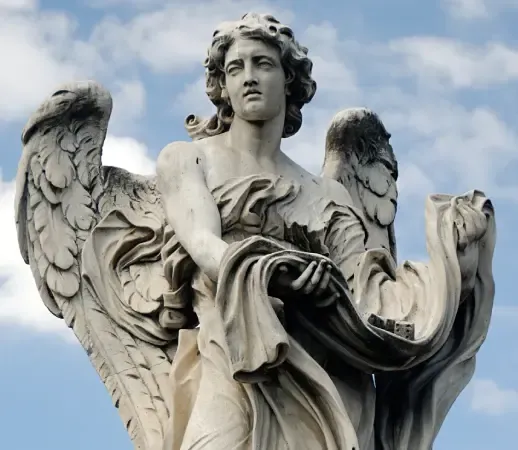
Angel with the Garment and Dice
Paolo Naldini sculpted this work, which reminds us of the final humiliation when Roman soldiers gambled for Jesusʼ tunic with dice while he was on the cross.
Photo: “Angel Ponte Sant Angelo Garment Dice” by Jastrow.
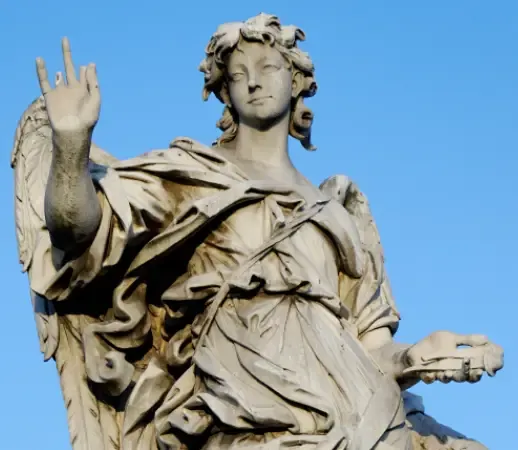
Angel with the Nails
Girolamo Lucenti is the creator of this angel, who delicately holds the nails of the crucifixion, focusing the viewerʼs attention on the most painful details of the biblical account.
Photo: “Angel Ponte Sant Angelo Nails” by Jastrow.
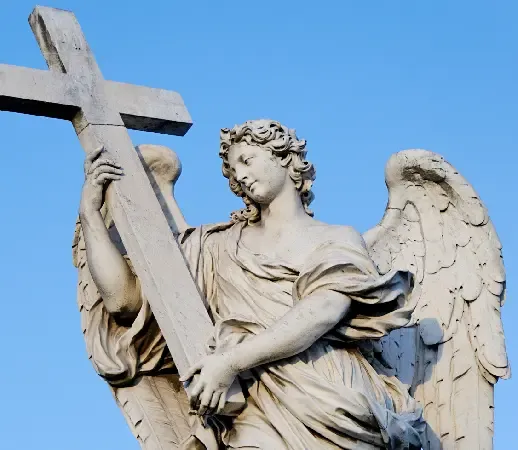
Angel with the cross
Ercole Ferrata designed this angel, who carries the weight of the cross on his shoulders, symbolizing the ultimate sacrifice.
Photo: “Angel Ponte Sant Angelo cross” by Jastrow.
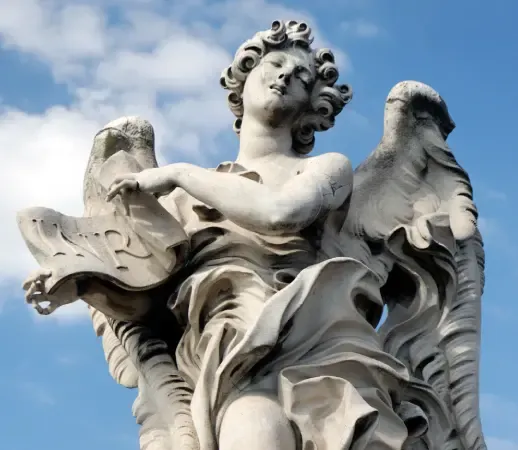
Angel with the Superscription (INRI)
As with the crown of thorns, Berniniʼs original for this statue is located in the church of SantʼAndrea delle Fratte in Rome. The one on the bridge is a copy by Giulio Cartari, showing the sign with the initials “Iesus Nazarenus Rex Iudaeorum,” which in English means: “Jesus of Nazareth, King of the Jews.”
Photo: “Angel Ponte Sant Angelo Superscription” by Jastrow.
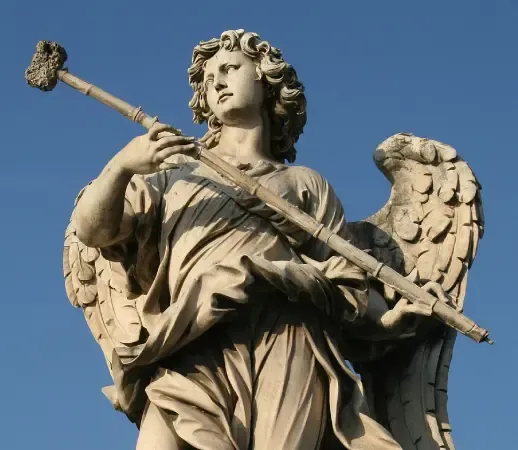
Angel with the Sponge
Antonio Giorgetti sculpted this figure, holding the sponge soaked in vinegar offered to Jesus to drink in his final moments, nearly closing the cycle of martyrdom.
Photo: “Angel bearing a sponge, by Antonio Giorgetti” by Jean-Pol_GRANDMONT.
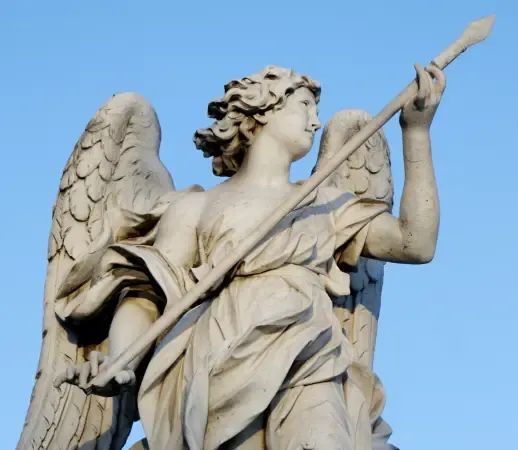
Angel with the Lance
Finally, Domenico Guidiʼs work represents the soldier Longinus (a Roman centurion present at the crucifixion) piercing Christʼs side with a lance to confirm his death, completing this marble Stations of the Cross.
Photo: “Angel Ponte Sant Angelo lance” by Jastrow.
Whatʼs nearby?
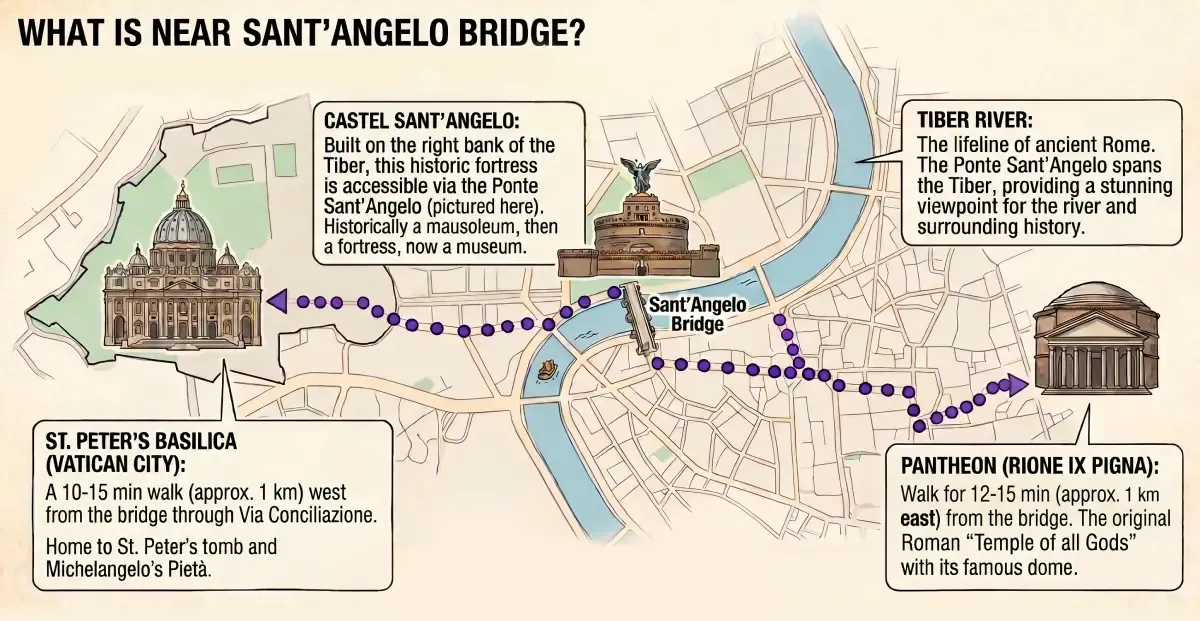
When you visit the bridge, you will realize you are very close to other points of interest. Near the Sant Angelo bridge, you can visit:
Castel Sant'Angelo
Castel Sant'Angelo
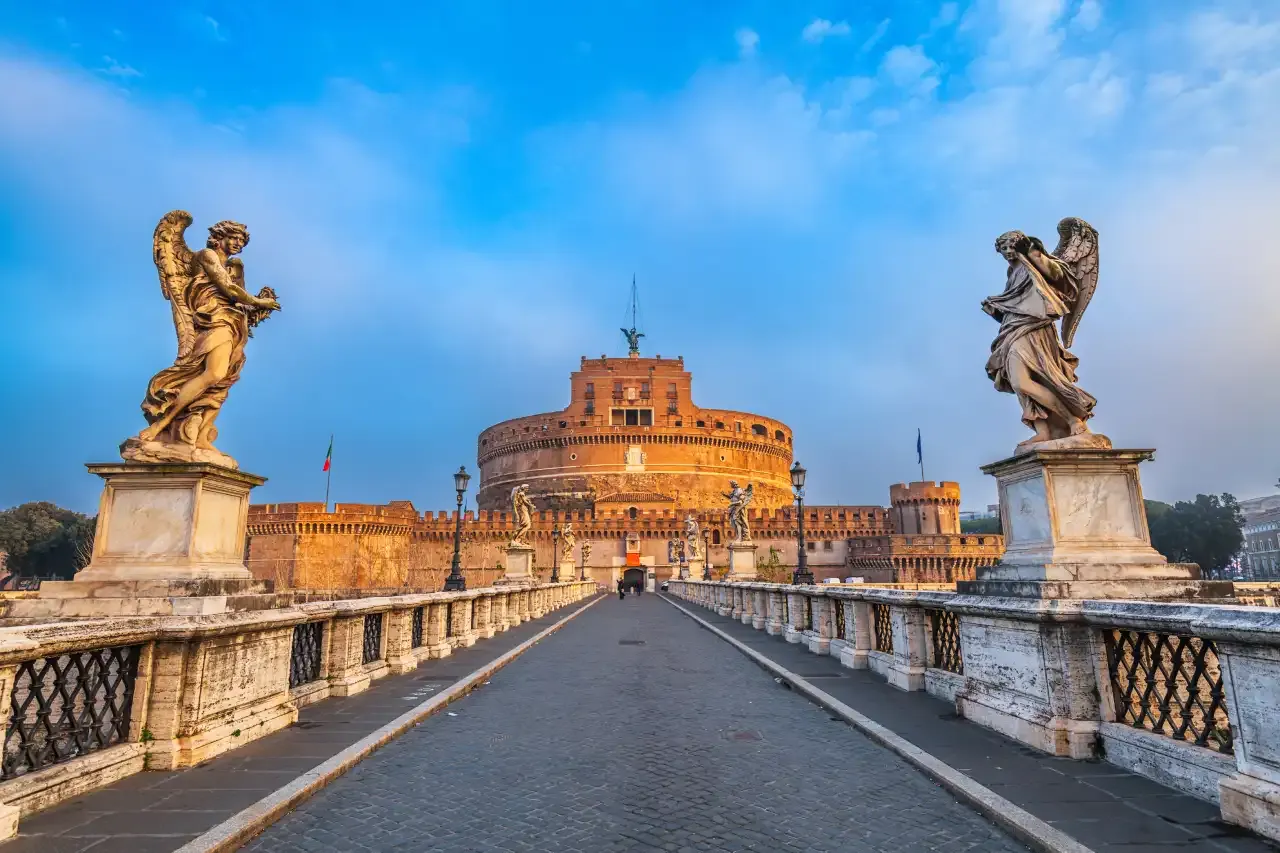
The first thing you will encounter, literally at the end of the bridge, is Castel SantʼAngelo. This building has been everything: a mausoleum, a papal fortress, and a prison. A Facebook user comments that this place: “Next to the Colosseum itʼs my favourite place in Rome. They have displays inside that show the original architecture, how it used to look and how itʼs changed over time. The cafe inside is worth a visit too.”
Another user on the same social network shares a tip for your visit: “I recommend approximately at 5 pm entrance so you are able to see sunset at the top.” You only need to walk about 50 meters to reach its main entrance.
St. Peter's Basilica
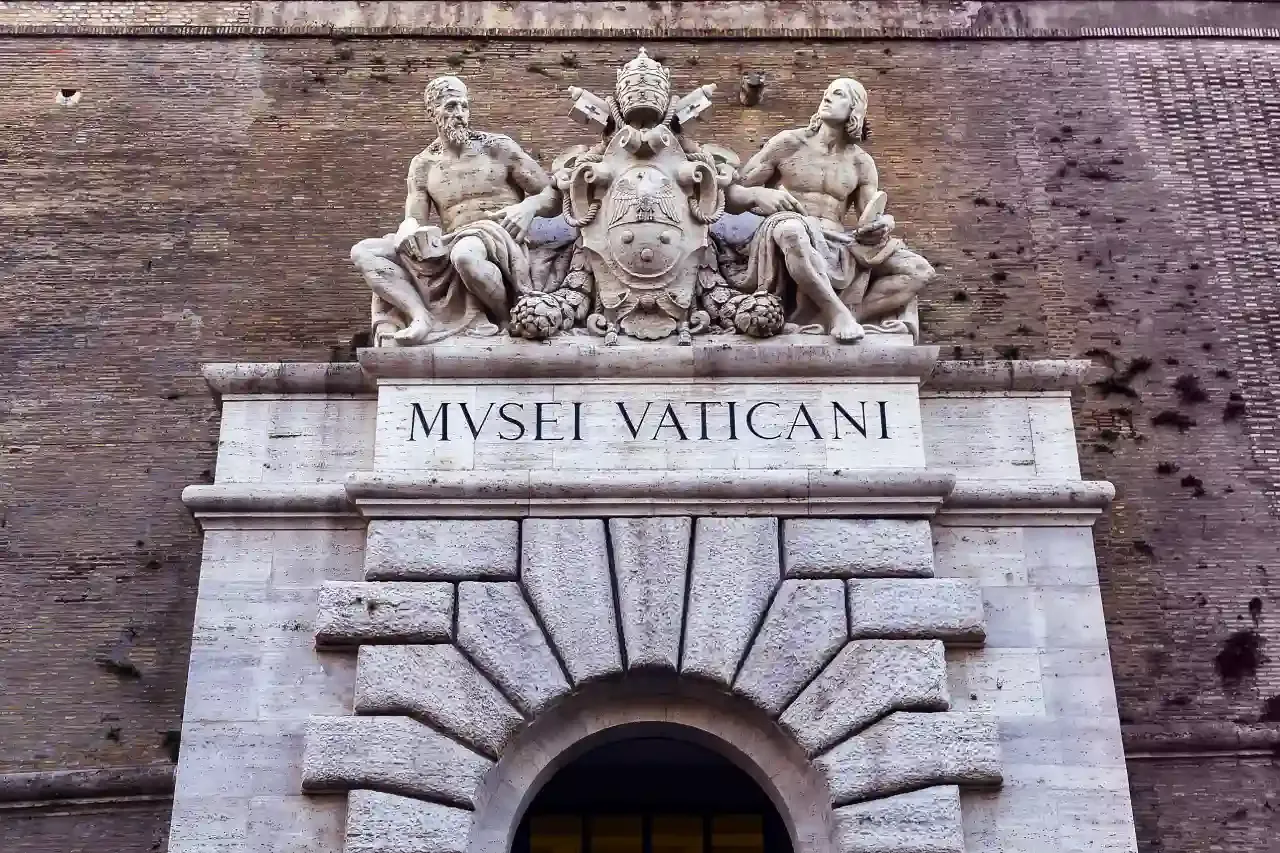
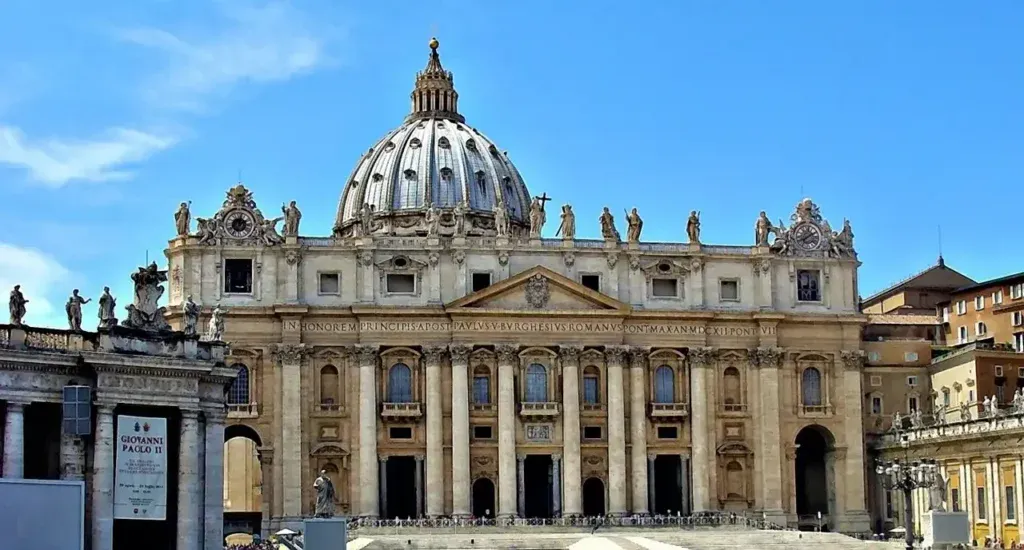
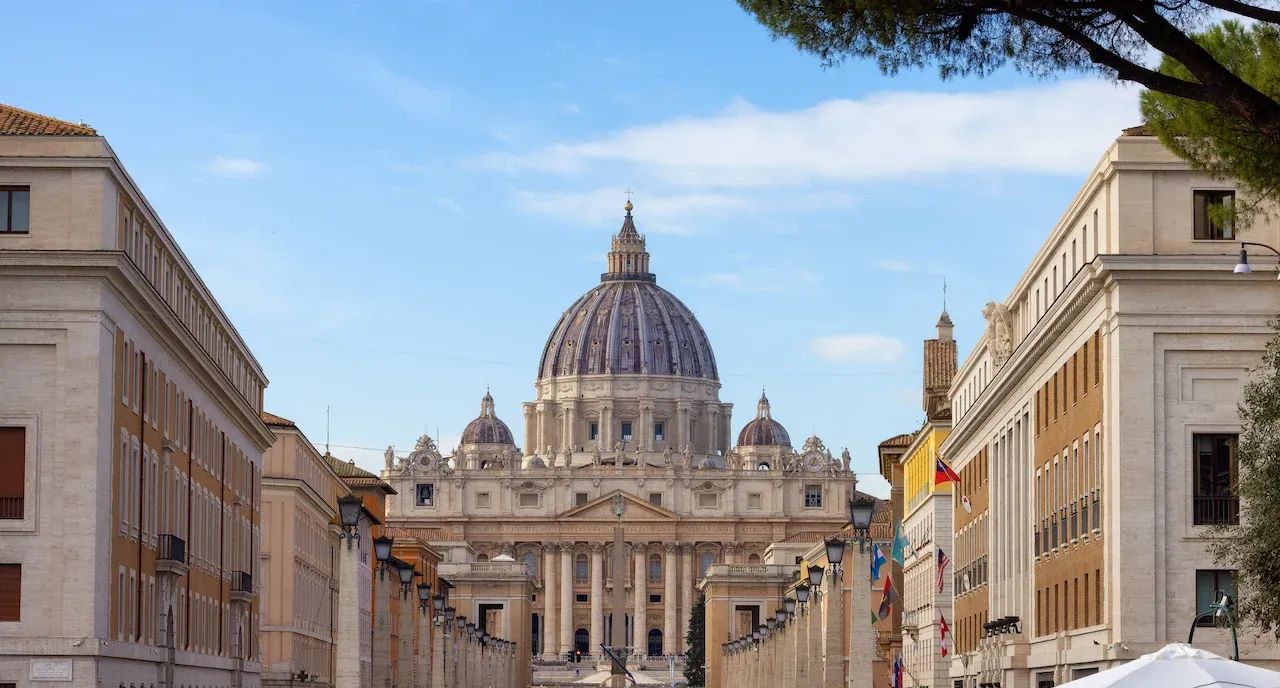
If you continue walking along Via della Conciliazione for about 800 meters (which will take you 10 to 12 minutes), you will reach St. Peterʼs Basilica in Vatican City. Regarding this visit, a Reddit user suggests: “The Basilica itself is free to enter, lines for security are generally shorter in the morning, so get there early. To go to the top of the dome, you will need a ticket but it is worth the experience.”
Tiber River
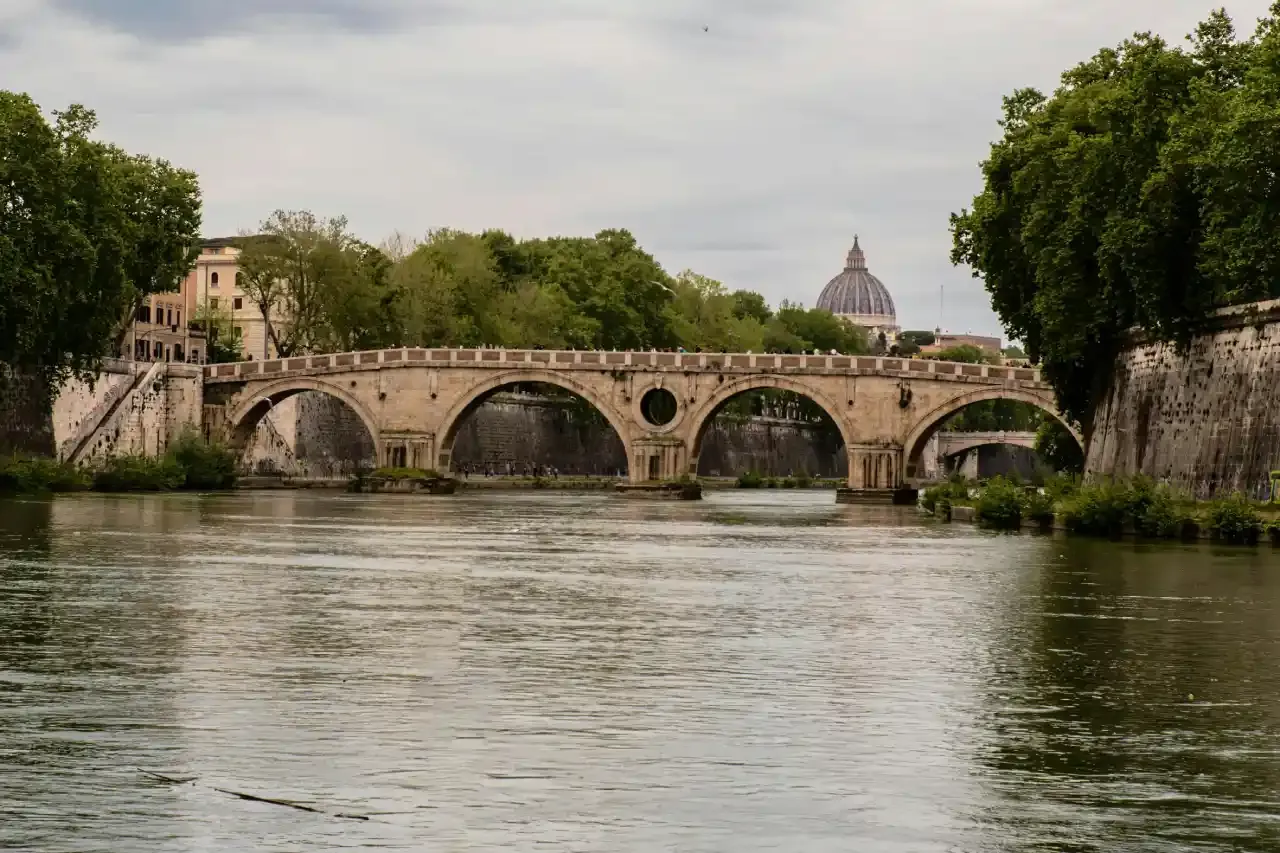
Tiber River
Beneath your feet lies the Tiber River. If you look at the water, you might notice a greenish tint. If you wonder why the water is that color, this Reddit user explains it clearly: “It is its natural color. The whole river passes through valleys made mostly out of tuff (a type of soft, porous rock) and picks up the particles it erodes. The color is due to the particles of tuff and clay suspended in the water, making it murky.”
They also add about the surroundings: “Itʼs very pedestrian friendly. You can walk down stairs and follow along it. It meanders through the city, so youʼre bound to run into it at times on your walks.”
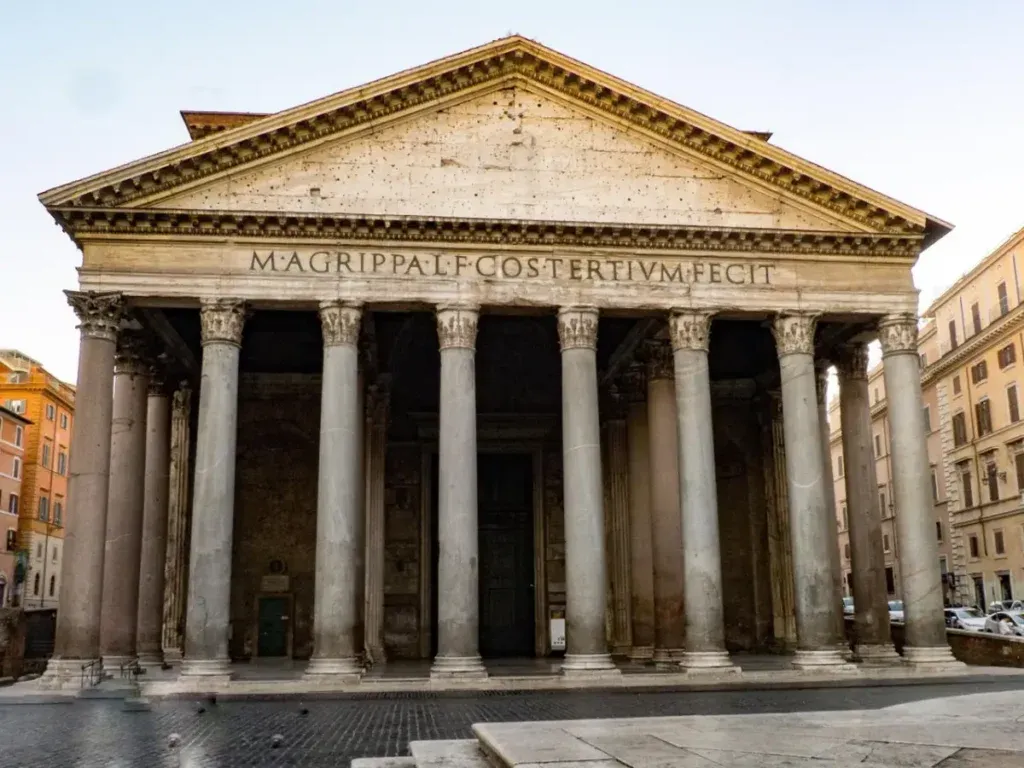
Pantheon
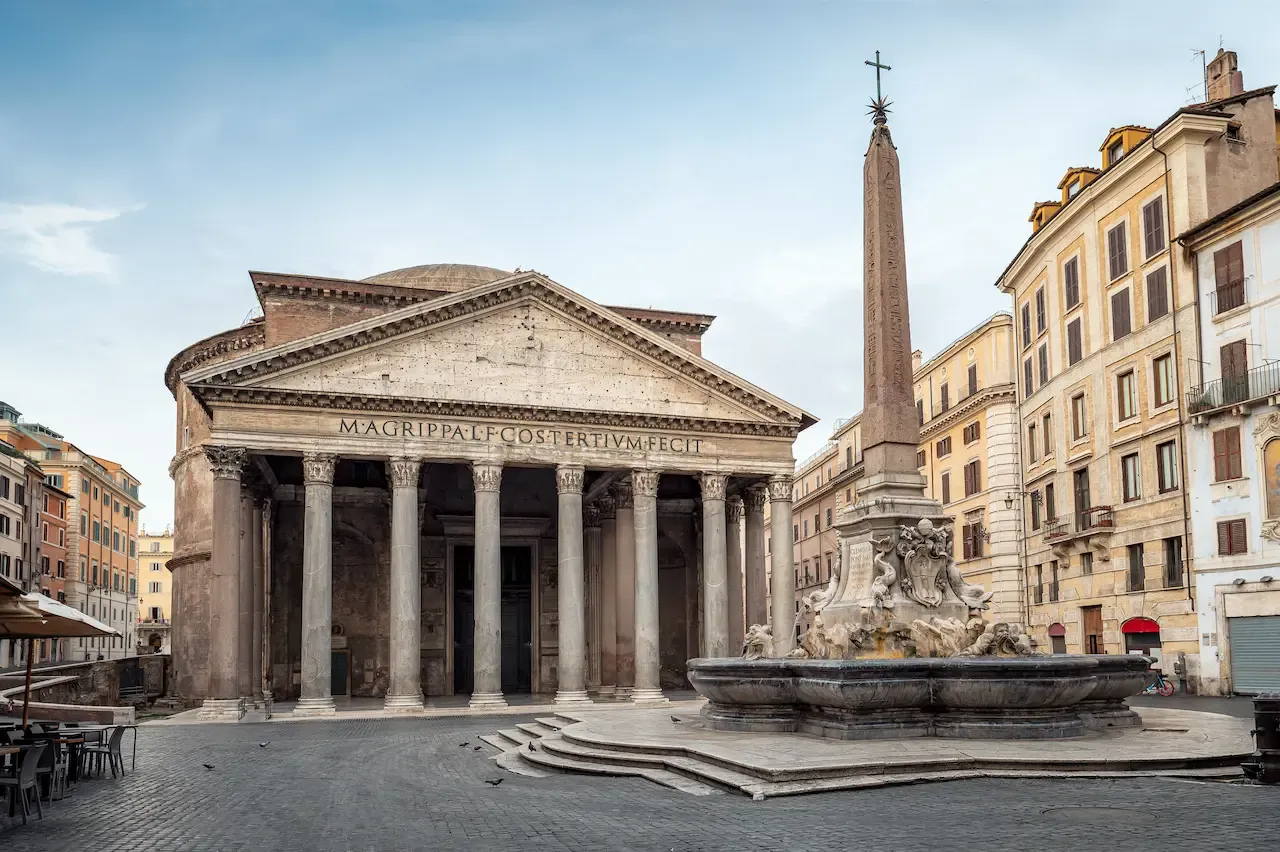
Finally, if you cross to the side opposite the castle and walk for about 15 minutes (covering approximately 1.2 kilometers through the city center streets), you will find yourself in front of the Pantheon. This building is the best-preserved ancient Roman monument in the world. Upon arrival, the first thing that will catch your eye is its imposing portico of granite columns. Once inside, looking up at its concrete dome, you can see its famous oculus open to the sky, which lets in natural light and even rain.
History of the Bridge of Angels
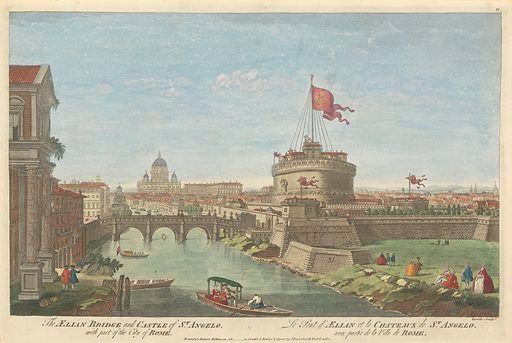
History of the Bridge of Angels
To understand the history of the Bridge of Angels, one must travel back to 134 AD when Emperor Hadrian ordered its construction. Its original purpose had nothing to do with the angels we see today; rather, it served as a solemn access route from the city center to his own mausoleum.
The history behind this site tells us that while the base is Roman, the appearance we see now is the result of a major Baroque renovation in the 17th century. It was at this time that the design changed radically to become the religious setting we know, replacing old decorations with the army of angels that today guard the crossing over the Tiber.
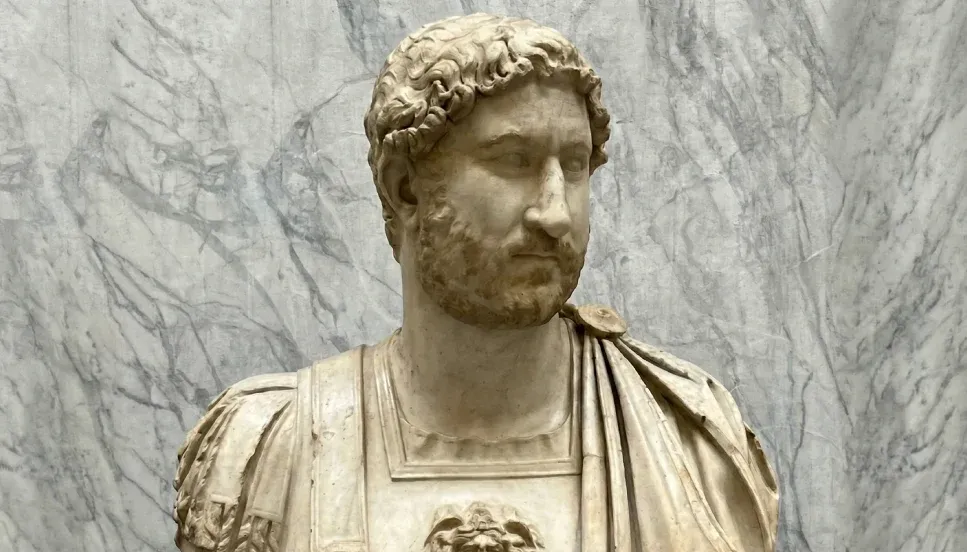
Who built and commissioned the Bridge?
The person responsible for this structure was Emperor Hadrian. Hadrian was passionate about architecture and wanted his tomb to be the most impressive in the city. The architect in charge was Demetrianus, who completed the project in just a few years.
During Roman times, the bridge was known as the Aelian Bridge in honor of the emperorʼs family. Over the centuries, following the fall of the empire, the bridge passed into the hands of the papacy, who were responsible for its maintenance and for adding the artistic improvements that so many tourists enjoy today during their trip to Rome.
Historical events
Over the years, this bridge has witnessed both joyful moments and quite dark events. Here are the most important historical events:
- The main stage for papal processions: With the rise of ecclesiastical power, the bridge became the primary stage for papal processions. These processions, steeped in symbolism, would set out from the center of Rome and cross the bridge toward the old St. Peterʼs Basilica. The parade of religious figures, cardinals, and the Holy Father himself was not just an act of faith, but a display of political and spiritual power intended to impress both Roman citizens and foreign dignitaries visiting the Eternal City.
- The tragedy of the 1450 Jubilee: During the Jubilee of 1450, under the papacy of Nicholas V, the city was overwhelmed by a massive influx of pilgrims seeking plenary indulgence. In a moment of collective panic, the wooden structure serving as a railing and the vendorsʼ stalls narrowing the path could not withstand the pressure of the crowd. Consequently, due to the enormous number of people attempting to cross simultaneously, the bridgeʼs barriers collapsed catastrophically. This triggered a human stampede and caused hundreds of people to fall into the waters of the Tiber. Chronicles of the time estimate that more than 170 people lost their lives—some crushed by the crowd and others drowned in the current—turning a celebration of hope into a day of national mourning.
- Architectural reforms and security measures: Following the magnitude of the tragedy, the papal administration realized the bridge was a dangerous structure for a growing city. As a result, drastic measures were taken to widen access and improve safety for future celebrations. Old houses and structures blocking the bridgeʼs entrances were demolished to allow for a smoother flow of people and prevent lethal crowding. These reforms were not only technical but also paved the way for the bridgeʼs later aesthetic renovation. Centuries later, Pope Clement IX would commission Bernini to create the famous angels that decorate the parapets today, transforming the site of the former tragedy into the artistic promenade we know today.
Architecture of Ponte SantʼAngelo
Ponte SantʼAngelo is a hybrid structure that combines ancient engineering with 17th-century art. The base and central arches maintain their original 2nd-century Roman character. They are constructed from large blocks of travertine, an extremely dense and functional limestone. This foundation was designed with such technical precision that it has stood for nearly two millennia, resisting the constant flooding of the Tiber River that historically plagued the city. The robustness of these Roman foundations is what allows the bridge to remain navigable today.
In contrast, the upper section and the sculptural ensemble represent the pinnacle of the Baroque style. This decorative phase was an aesthetic renovation commissioned to transform the approach to the Vatican. For the execution of the ten angel statues, Carrara marble was used, selected for its high quality and characteristic whiteness. This material has unique lighting properties; due to its low porosity, the marble shines with a particular intensity under the Roman sun, creating a direct visual contrast between the sobriety of the travertine base and the artistic lightness of the figures above.
Plan your visit
Visitors can check the opening hours to plan their arrival and explore all the options for how to get to the bridge by public transport or on foot:
Opening hours
The Castel Sant'Angelo opens to the public from Tuesday to Sunday, between 9:00 and 19:30. The ticket office ceases operations and ends admissions at 18:30, exactly one hour before the final closure of the complex.
The monument remains closed every Monday, as well as on January 1 and December 25 for official holidays. During specific cultural periods or events, the administration may extend evening hours to permit tours of the bastions and the Passetto di Borgo. Visitors verify the calendar on the official platform before arrival to confirm potential variations in access schedules or seasonal openings.