
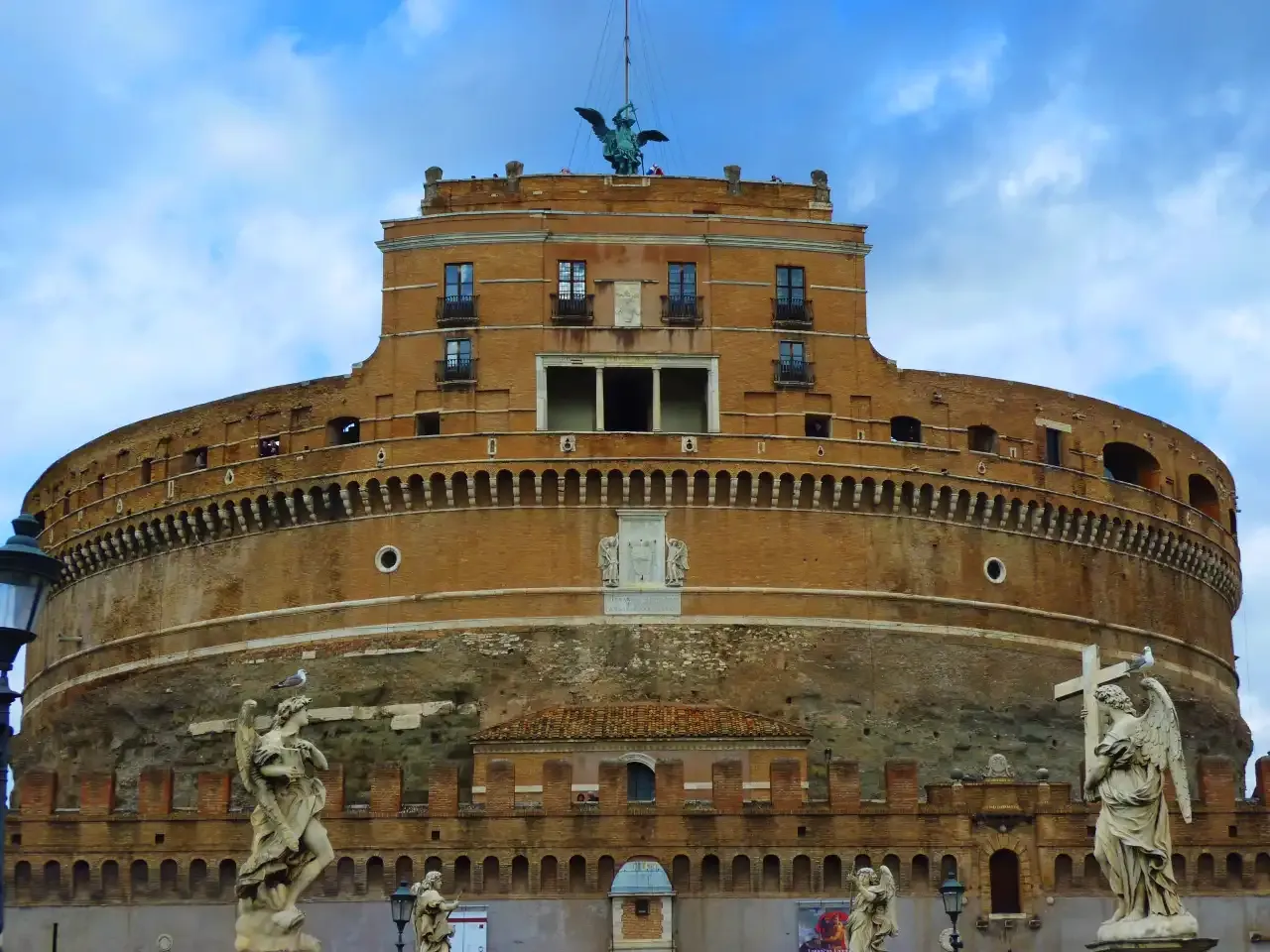
How long to visit Castel Sant'Angelo
Determining how long to visit Castel Sant'Angelo depends on the level of detail a visitor intends to explore within the five architectural layers of the fortress. Selecting a preferred tour format allows for a precise allocation of time within the daily Roman itinerary.
Support when you need it
Customer support to help you with everything you need from 8:00 to 18:00.
Fast and online booking
Select your ticket for your needs and preferences and avoid the lines booking here.
Top Attraction in Rome
Ascent through the fortress levels to observe the architectural history and the evolution of the city.
How long will it take depending on the type of visit?
The amount of time required to navigate the monument fluctuates depending on the method of exploration and the level of historical detail desired.
Self-guided visit
An independent tour allows for a flexible pace through the five levels of the structure, typically requiring between 90 minutes and two hours. This timeframe provides sufficient opportunity to ascend the Roman spiral ramp, view the Renaissance frescoes in the Papal Apartments, and spend time on the Angel's Terrace.
Visitors also navigate the external defensive bastions and the panoramic walkway that encircles the upper perimeter of the fortress. These outdoor sections offer a perspective on the military engineering of the walls and the strategic positioning of the castle along the Tiber River.
How long does it take to visit both the Vatican and Castel Sant'Angelo?
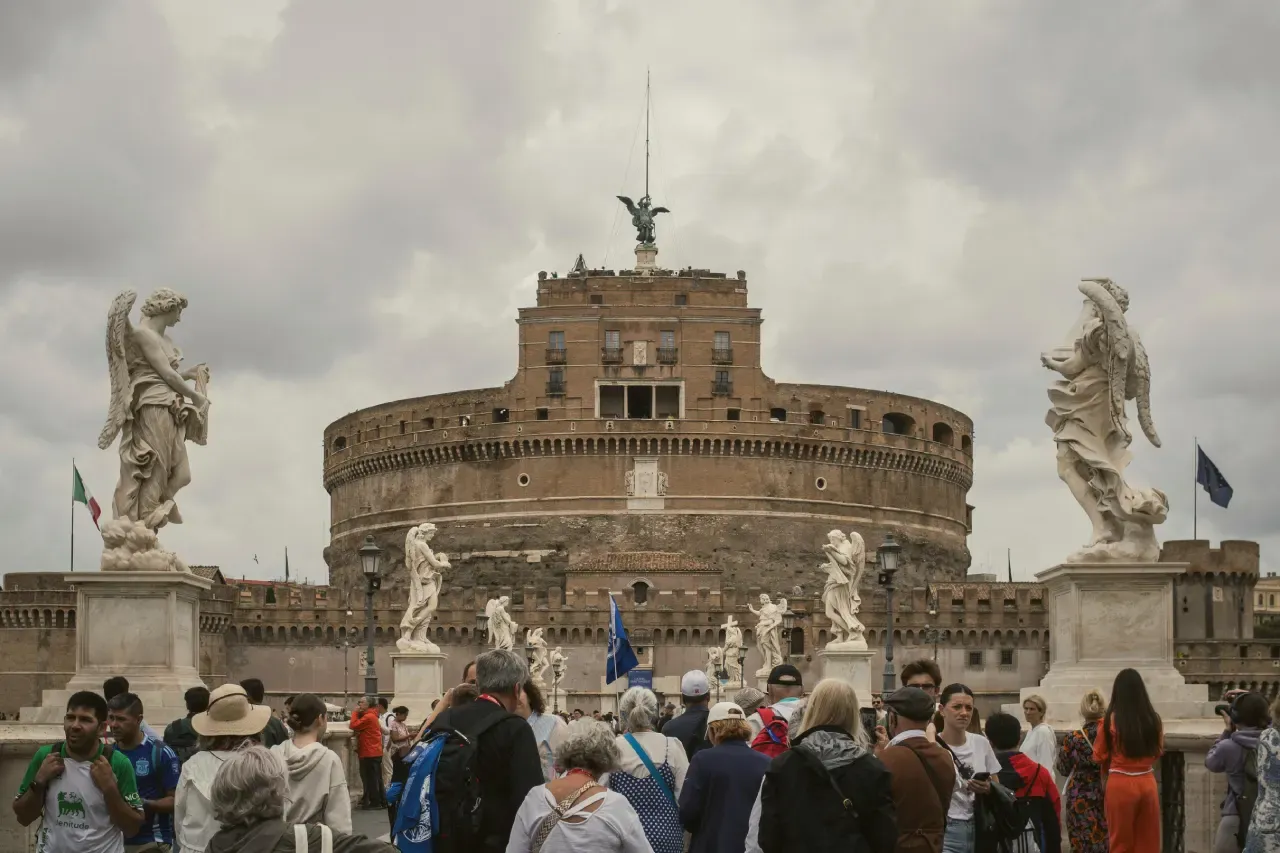
These two sites maintain a historical connection via the Passetto di Borgo, a fortified corridor used by popes to escape the Vatican for the safety of the castle. However, visiting both in a single day requires specific planning due to the physical distance between their respective entrances.
While the walk from the Castel Sant’Angelo exit to St. Peter’s Square takes approximately 10 minutes along the Via della Conciliazione, the entrance to the Vatican Museums sits on the northern side of the Vatican walls. This adds an additional 15 to 20 minutes of walking, resulting in a total transit time of roughly 30 minutes between the two monuments.
The most efficient sequence involves visiting the Vatican Museums first, followed by St. Peter’s Basilica, and concluding with Castel Sant’Angelo. The Vatican Museums contain nearly nine miles of galleries and artifacts, making them the most physically demanding portion of the day. Budgeting 4 to 5 hours for the Vatican section is necessary, as the museums alone require a minimum of 3 to 4 hours, and the Basilica adds another 1 to 2 hours. A realistic timeline begins at 08:00 at the Vatican Museums, transitions to the Basilica by noon, allows for a one-hour lunch break, and concludes with a two-hour visit to the castle starting at 14:30.
What if the Colosseum is added?
Integrating the Colosseum, the Roman Forum, and the Palatine Hill into an itinerary that already includes the Vatican and Castel Sant'Angelo creates a 10.5-hour schedule of continuous activity. The distance between the Vatican area and the Colosseum is approximately 4.5 kilometers. Utilizing the Metro is the most reliable choice to avoid unpredictable Roman surface traffic; visitors board Line A at Ottaviano, transfer at Termini to Line B, and depart at the Colosseo station. This transit typically takes 30 minutes, whereas buses often exceed 50 minutes during peak hours.
An ambitious "big three" itinerary requires a rapid pace at each location: The day begins with a 3.5-hour express tour of the Vatican Museums and Sistine Chapel, followed by a one-hour walkthrough of St. Peter’s Basilica. After a quick transit and a one-hour focused visit to the Castel Sant’Angelo terrace, visitors must travel to the Colosseum by 15:30 to complete a three-hour tour of the archaeological park before closure.
This plan necessitates pre-booking all tickets months in advance for specific time slots. This itinerary prioritizes geographical coverage over historical immersion and involves significant physical exertion, often exceeding 25,000 steps.