You’re planning your Rome itinerary and wondering how much time you’ll need for Castel Sant’Angelo? Here’s what you need to know to plan your visit without feeling rushed.

Support when you need it
Customer service to help you with all your needs from 8:00 a.m. to 7:00 p.m.
Fast and online booking
Choose the best option for your needs and preferences and avoid the lines.
Top attraction in Rome
Explore a true symbol of power, history, and art in the heart of Rome.
A typical visit takes around 2 to 3 hours, but this can vary quite a bit. Crowds, whether you choose a guided tour, and how long you spend soaking up those incredible views from the top can all extend your time there.
The beauty of Castel Sant’Angelo is that it’s remarkably flexible. You can tailor your visit to match your schedule and interests perfectly.
If you’re exploring on your own, plan for 2 to 3 hours.
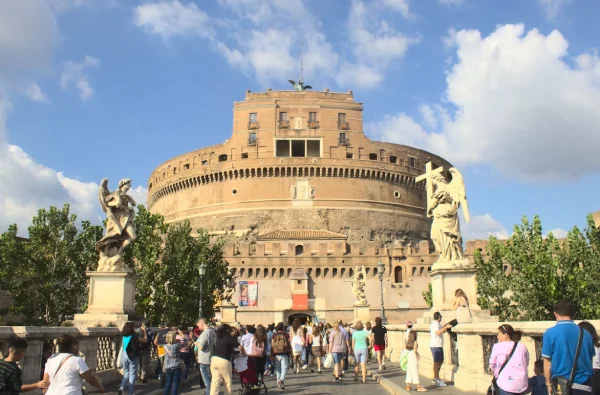
This gives you enough time to really appreciate what makes this place special. The castle rises through seven distinct levels, and each one tells a different story. You’ll start at the bottom with Emperor Hadrian’s original mausoleum. From there, you’ll move through medieval courtyards and Renaissance fortifications before reaching the stunning Papal Apartments. These lavishly decorated rooms deserve at least 20 to 30 minutes of your attention.
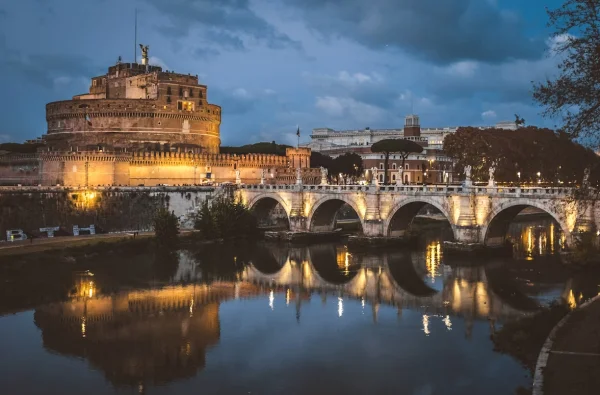
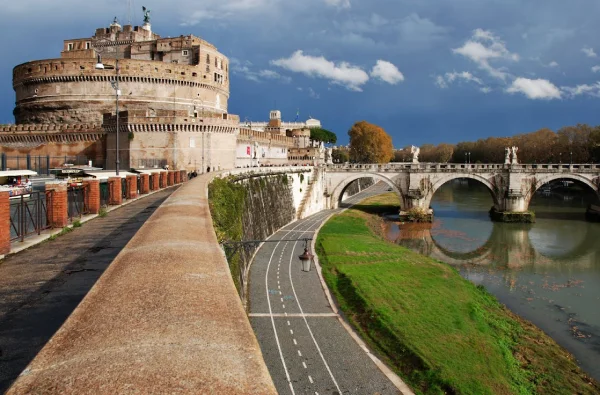
The darker chapters of the castle’s history await in the underground passages and prisons, where famous (and infamous) figures were once held. And then comes the grand finale: the upper terrace crowned by that magnificent bronze statue of Archangel Michael. The 360-degree views of Rome from up here are unforgettable, offering an unmatched perspective of St. Peter’s Basilica and the Tiber River winding below.
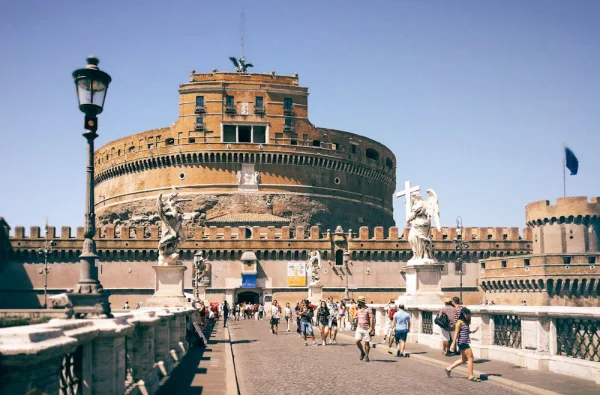
Don’t forget to factor in the Ponte Sant’Angelo on your approach and exit. This beautiful “Bridge of Angels” adorned with Bernini’s sculptures is really part of the whole experience, not just a way to get there.
Want the historical context without doing hours of research beforehand? A guided tour gives you exactly that. These typically run 1.5 to 2 hours.
A knowledgeable guide strings together the architecture, art, and historical events into one cohesive narrative, making sure you don’t miss the key moments. Some operators even offer specialized options, there are one-hour “express” tours that hit the main halls and terrace, perfect if you’re pressed for time. On the flip side, thematic tours focusing on subjects like the lives of the popes can stretch beyond two hours.
This might be your sweet spot if you want some structure but also the freedom to wander. Most visitors complete an audio-guided tour in about 60 to 90 minutes.
You get detailed explanations of the castle’s history and art, but you’re still in control. Want to linger in the Papal Apartments because the frescoes have caught your eye? Go for it. Fascinated by the museum collections? Take your time. It’s the independence of going solo combined with the informational richness of having a guide, which is why so many travelers choose this middle path.
These two sites are historically connected (popes once escaped from the Vatican to the castle through a fortified corridor) but visiting both in one day requires some smart planning.
The walk from Castel Sant’Angelo’s exit to St. Peter’s Square takes about 10 minutes along the scenic Via della Conciliazione. But here’s the catch: the Vatican Museums entrance is on the far northern side of the Vatican walls, requiring an additional 15 to 20-minute walk. So you’re looking at roughly 25 to 30 minutes total transit time between the sites.
The smartest sequence? Vatican Museums first, then St. Peter’s Basilica, then Castel Sant’Angelo. This might seem counterintuitive (why not follow the historical papal escape route?), but trust me on this. The Vatican Museums are enormous and exhausting, we’re talking nearly nine miles of artifacts. Tackle them first thing in the morning when you’re fresh. When you exit St. Peter’s Basilica, you’re perfectly positioned in St. Peter’s Square for that short, pleasant walk across the Tiber to the castle.
Budget 4 to 5 hours just for the Vatican portion. The museums alone need a minimum of 3 to 4 hours (guided tours condense this to about 3 to 3.5 hours). St. Peter’s Basilica adds another 1 to 2 hours, or up to 3 hours if you climb the Dome.
Here’s a realistic full-day timeline:
That’s 9 hours total. It’s doable, but it’s a lot of walking and standing.
Alright, so you want to hit the big three in one day. This is possible, but let me be clear: this is a marathon, not a stroll. It’s the absolute maximum you can squeeze into a single day, and it requires military-level planning.
From the Vatican area to the Colosseum is 4 to 5 kilometers. Take the Metro, it’s the only sensible choice. Board Line A at Ottaviano (near the Vatican), transfer at Termini to Line B, then ride two stops to Colosseo station. Total time including the walk to the station: 20 to 30 minutes. Buses might seem appealing, but Rome’s traffic is notoriously unpredictable. A journey that should take 35-50 minutes can easily stretch past an hour, and with timed-entry tickets to the Colosseum, you cannot afford that risk.
Here’s what this ambitious day looks like:
That’s 10.5 hours of non-stop sightseeing. You’ll rack up over 28,000 steps, and every single ticket needs to be pre-booked for specific time slots, ideally months ahead.
Is it worth it? Only if it’s your only option. This itinerary prioritizes coverage over immersion—you’re collecting checkmarks rather than truly experiencing these profound places. If you have two or more days in Rome, split these sites up. You’ll actually remember and appreciate what you saw, rather than just surviving the day.